
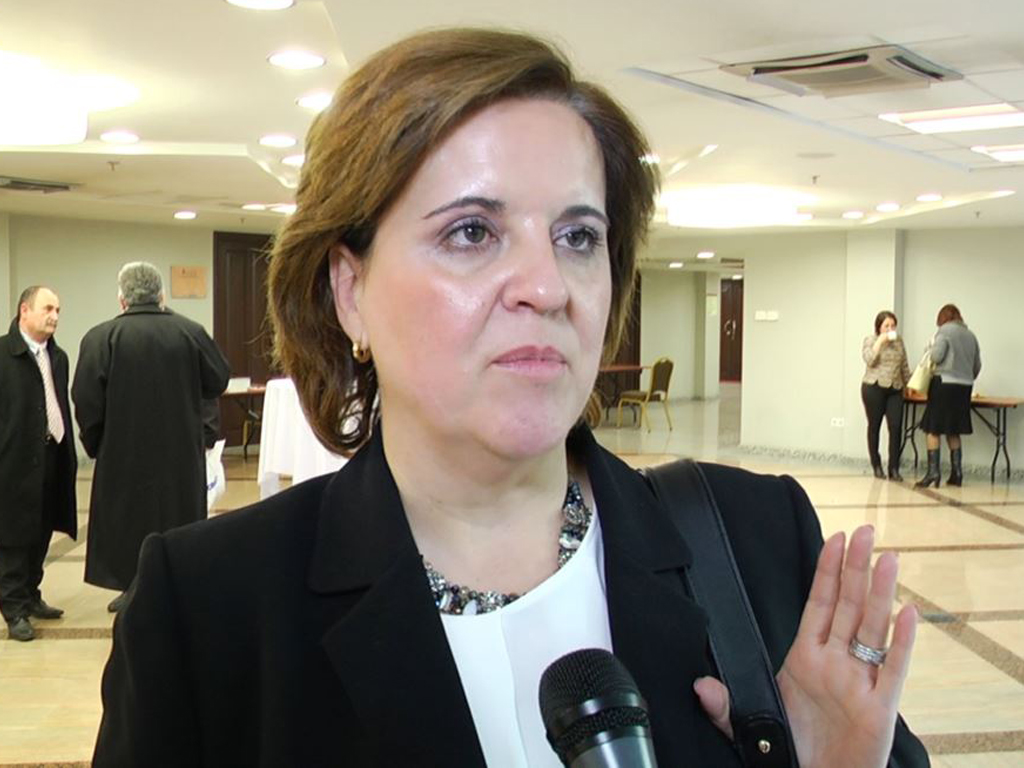
Teresa Sanchez, International Monetary Fund's Resident Chief in Islamabad, stated in her interaction with a section of the media, with respect to the second amendment finance bill 2019, "Our understanding is that it includes a set of Tax, administrative and regulatory measures aimed at lifting distortions that could foster private sector activities. Further measures are needed to increase revenue collection in the short term to support efforts to stabilize the economy." This statement coupled with numerous statements by the mission leader for the Extended Fund Facility bail-out package (September 2013-16), who incidentally is also the mission leader for ongoing discussions with the PTI-led administration for another possible bail-out package, leaves little doubt that IMF staff not dealing directly with the media, unlike in the past, wish to have an on the record media presence at least in Pakistan. Additionally, the mission leader for the EFF is being held responsible for some flawed policies during the Dar tenure as finance minister including heavy reliance on external borrowing to shore up foreign exchange reserves and frequent market interventions to prop up the value of PKR.
Fund staff working in resident missions as well as mission leaders for a programme under consideration deal directly with the ministry of finance officials and undertake stakeholder consultations to assess and determine the view of various critical sectors, including non-governmental organizations, prior to finalizing a programme. It is the government's prerogative to agree (or not) to any conditions set by the Fund; therefore, it is the government that must defend the conditions that it has agreed to and submitted in writing to the Fund in its Letter of Intent (LoI). Needless to add, an LoI is required before each tranche disbursement or in other words the administration has to agree to a change or a reaffirmation of time bound actions and/or structural benchmarks after every quarter in the event that it is on a programme and this LoI is uploaded on the Fund website as well as on the website of the ministry of finance. Given this set of clearly defined IMF rules it is surprising that its representative should deem it appropriate to publicly state that more revenue measures are required in the short term to stabilize the economy even if this be the case, because at best it is an irrelevant comment (as unless Pakistan is on a programme there is no mandate to make such a statement) and, at worst, it can actually dampen the market sentiment which subsequent to the second amendment finance bill 2019 is visibly on the upswing.
Raising revenue, as suggested, should be one of the options and unfortunately Pakistani administrations during IMF programmes have relied on the following inappropriate measures to meet the Fund's conditions: (i) raising taxes on existing taxpayers, (ii) raising indirect taxes that hit the poor more than the rich, and (iii) raising tariffs to meet the cost incurred by utilities rather than on embarking on a long-term governance improvement plan. None of these measures has moved the country towards meaningful reforms designed to make the tax structure fair, equitable and non-anomalous.
Be that as it may, this newspaper believes that the second amendment finance bill 2019 is high risk as chances of fiscal stimulation spearheading achievement of economic stabilisation in the short term are slim. In the very short term or say within six months of assuming power the Pakistan Tehrik-i-Insaaf government should have begun dealing with the unsustainable budget deficit focused on (i) given the close ties with the two major recipients of current expenditure the government would have been well advised to seek sacrifices in terms of voluntary reduction in their allocations for a year or two, and (ii) not on reducing development expenditure as was done during the first amendment finance bill 2019 which has had implications on the growth rate with a consequent impact on revenue and employment prospects.